Aarti · Chalisa · Stuti

Jeen Mata Aarti & Chalisa ॐ जय जीण भवानी

The aarti is the moment the whole gathering stands, the lamp is lifted and every voice joins in one song. The chalisa is the quieter companion — forty verses that tell the Mother’s story and ask for her protection. Both are given here in full, with the method of performing aarti and the Sanskrit shlokas that frame them.

Shri Jeen Mata Ki Aarti

ॐ जय जीण भवानी — the complete aarti

Sing the refrain once before the first stanza and after every stanza. The stanzas move from the Mother’s abode, to her form, to her miracles, to the devotee’s offerings, and finally to the blessing promised to all who sing. The traditional melody is the same familiar tune used for most North Indian aartis, set to a steady Keherwa rhythm with bell and conch.

ॐ जय जीण भवानी, मैया जय जीण भवानी।
रेवासा में विराजो, जग की महारानी॥

अरावली की गोद में, सोहे भवन तेरा, मैया… दूर-दूर से आ के, भगत करें फेरा॥ ॐ जय…

सिंदूरी मुख चमके, नैनन में ज्योति, मैया… गल में माला सोहे, जड़े हीरे-मोती॥ ॐ जय…

अष्ट भुजा अति सुंदर, शस्त्र लिए भारी, मैया… दुष्ट दलन को आईं, भगतन हितकारी॥ ॐ जय…

भँवरों की सेना से, अरि दल को मारा, मैया… अखंड जोत जला कर, भक्तों को तारा॥ ॐ जय…

लाल चुनर, नारियल, ध्वजा चढ़े भारी, मैया… नवरातों में मेला, आवें नर-नारी॥ ॐ जय…

कुलदेवी तुम माता, सबकी रखवाली, मैया… सुख-संपत्ति की दाता, शक्ति शुभ वाली॥ ॐ जय…

जीण भवानी की आरती, जो कोई नर गावे, मैया… कहत भगत सुख पावे, संकट मिट जावे॥ ॐ जय…
Meaning in brief: “Glory to Jeen Bhawani, Queen of the world, who dwells at Rewasa. Your temple shines in the lap of the Aravalli and devotees come from afar to circle it. Your sindoor face glows, your eyes hold light, and garlands studded with gems adorn your neck. With eight beautiful arms bearing mighty weapons you came to destroy the wicked and protect the devoted. With an army of bees you defeated the enemy, and by lighting the eternal flame you saved your devotees. Red chunari, coconuts and flags are offered to you, and men and women gather at your Navratri fair. You are the kuldevi and protector of all, the giver of happiness and prosperity. Whoever sings this aarti finds joy, and their troubles are removed.”

Aarti Vidhi

How to perform Jeen Mata’s aarti at home, step by step

Aarti need not be elaborate. What matters is a clean place, a steady flame and a sincere heart. These six steps follow the common practice of North Indian households; families may have their own customs, which should always be respected.

  1. Shuddhi — prepare the space

    Bathe or wash hands and face, wear clean clothes, and sprinkle a little water (Gangajal if available) around the image or picture of Jeen Mata. Place a red cloth beneath her and offer a fresh flower.

  2. Deep — light the lamp

    Light a ghee lamp with one, five or seven cotton wicks in a brass or steel aarti plate, along with camphor or incense. Keep roli, rice grains, a flower and a little sweet on the plate.

  3. Arpan — make the offering

    Apply a tilak of roli or sindoor to the Mother, offer flowers, a chunari if you have one, and the bhog — a sweet, fruit, or traditional churma. Recite the shloka “Jayanti Mangala Kali” given below.

  4. Aarti — wave the flame

    Standing, rotate the plate clockwise while the whole family sings. A widely followed custom is four circles at the feet, two at the navel, one at the face, and seven around the whole form.

  5. Shankh & Ghanti — conch and bell

    Ring the bell steadily throughout the aarti, and blow the conch at the end if you have one. Then call out together: “Bolo Jeen Mata ki Jai!”

  6. Kshama — receive and ask forgiveness

    Pass the aarti to everyone present to take the warmth with both palms over their eyes and head. Fold hands, ask forgiveness for any mistakes in the worship, and distribute prasad.

Shri Jeen Mata Chalisa

The forty verses of Jeen Bhawani

A chalisa is a devotional poem of forty chaupai (four-quarter verses), opened and closed by doha couplets. The form was made beloved across North India by the Hanuman Chalisa, and communities have since composed chalisas for almost every form of the Divine. Reciting a chalisa is a complete act of worship in itself: it remembers the deity’s story, describes her form, recounts her deeds and ends with a prayer.

This Jeen Mata Chalisa, composed for our sangrah in the traditional Awadhi-Hindi chaupai style, follows that same arc. Verses 1–14 tell the life story of Jeevan Bai and her brother Harsh; 15–22 describe the eight-armed form and the miracles of the bees and the eternal flame; 23–36 speak of the Navratri melas, the kuldevi tradition and the blessings she grants; and 37–40 are the devotee’s personal prayer.

Recite it slowly and clearly, ideally after a bath and before the aarti. Many devotees recite it once daily, three times on Tuesdays and Fridays, and nine times each day of Navratri.

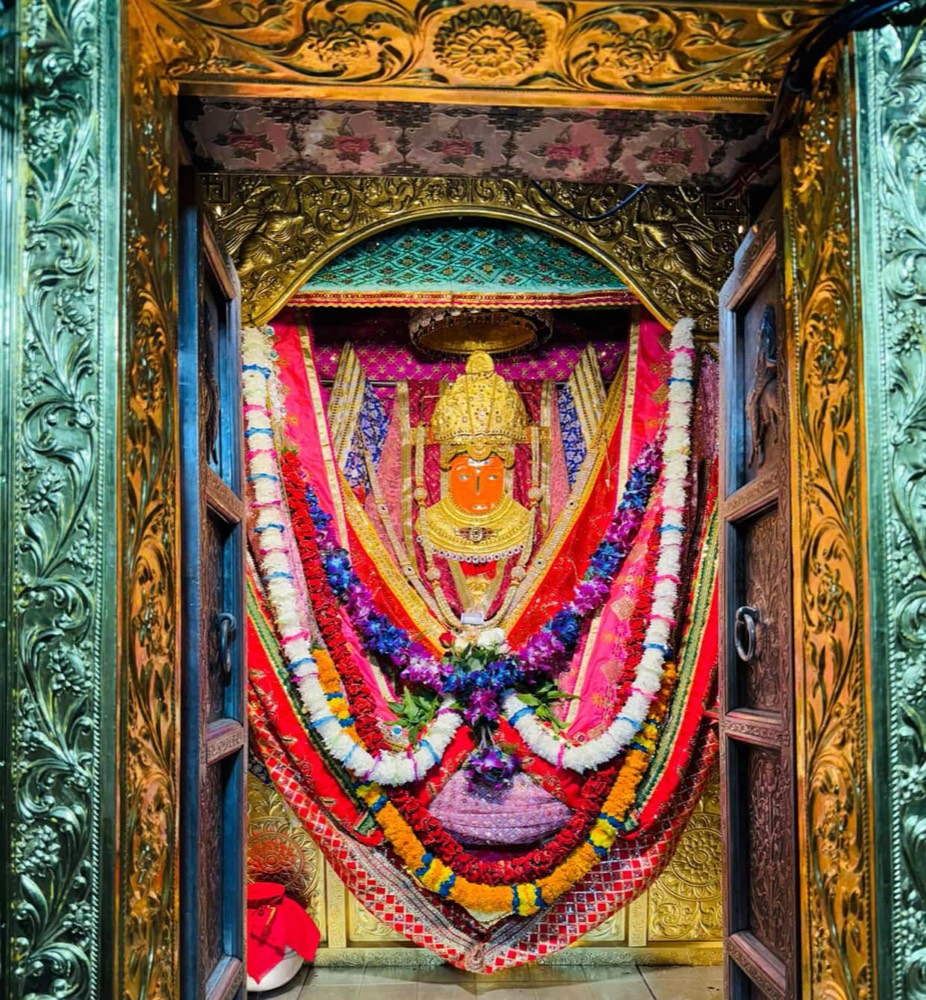
Full garbhagriha view of Jeen Mata between ornate golden doors, adorned with red and pink silks and long white, blue and red flower garlands
Darshan through the golden doors of the garbhagriha.
Doha · दोहाश्री गणपति गुरु पद सुमिर, धर हिय में विश्वास। जीण भवानी चालीसा, गाऊँ मन धर आस॥ अरावली की गोद में, रेवासा सुखधाम। जहाँ विराजें जीण माँ, तिनको कोटि प्रणाम॥
  1. जय जय जीण भवानी माता। तुम हो सकल जगत की त्राता॥
  2. अरावली पर धाम तुम्हारा। रेवासा जग में उजियारा॥
  3. चौहान कुल में जन्म तुम लीना। जीवन बाई नाम नवीना॥
  4. हर्ष भ्रात के संग में खेली। बचपन की वो प्रेम पहेली॥
  5. भाई-बहन का प्रेम निराला। जग में जिसका नाम उजाला॥
  6. भाभी संग पनघट पर आई। जल गागर सिर पर धर लाई॥
  7. कौतुक एक भया उस बारा। किसका पहले घट उतारा॥
  8. हर्ष ने भाभी का घट लीना। बहना का मन दुखिया कीना॥
  9. मन वैराग्य जगा तब भारी। छोड़ चली घर-बार दुलारी॥
  10. काजल शिखर पे डेरा डाला। तप का दीप जगा उजियाला॥
  11. हर्ष मनाने पीछे आए। चरणों में आँसू बरसाए॥
  12. पर तुम तप से तनिक न डोली। मधुर वचन भैया से बोली॥
  13. अब जग की मैं माँ कहलाऊँ। भक्तों के सब काज बनाऊँ॥
  14. हर्ष भी तप में लीन भये तब। हर्षनाथ कहलाए वे अब॥
  15. अष्टभुजा रूप तुम धारा। दुष्ट दलन कर जग को तारा॥
  16. खड्ग, त्रिशूल, चक्र कर सोहे। गदा, धनुष, शर सबको मोहे॥
  17. सिंदूरी मुख तेज निराला। गल सोहे फूलों की माला॥
  18. लाल चुनरिया गोटेदारी। मुकुट शीश पर शोभा भारी॥
  19. मुगल फ़ौज जब चढ़ कर आई। मंदिर पर विपदा गहराई॥
  20. भँवरों की सेना तुम भेजी। रिपु दल की सब शान समेटी॥
  21. बादशाह ने शीश झुकाया। जोत हेतु तब तेल चढ़ाया॥
  22. अखंड जोत दरबार में जागे। जिसे देख सब संकट भागे॥
  23. चैत्र, आश्विन नवरातों में। मेला भरता दिन-रातों में॥
  24. दूर-दूर से भगत जन आवें। ध्वजा, नारियल भेंट चढ़ावें॥
  25. जात-जडूला जो जन लावें। माँ की किरपा से सुख पावें॥
  26. कुलदेवी तुम बहु कुल केरी। सबकी राखो लाज घनेरी॥
  27. नव दुल्हन जब जात लगावे। सदा सुहागन का वर पावे॥
  28. निर्धन को तुम धन देती माँ। रोगी के दुख हर लेती माँ॥
  29. सूनी गोद भरने वाली। भक्तों की तुम हो रखवाली॥
  30. विद्या, बुद्धि, ज्ञान प्रदाता। तुमसे बढ़कर कौन विधाता॥
  31. जो जन तुमको ध्यान लगावे। मनवांछित फल निश्चित पावे॥
  32. संकट में जो नाम पुकारे। ताके तुम सब काज सँवारे॥
  33. भूत-प्रेत सब दूर पराहीं। जीण नाम जिनके मुख माहीं॥
  34. घर-घर में जब जोत जगावे। सुख-संपत्ति सब घर में आवे॥
  35. ढोल, नगाड़े, चंग बजावें। भगत तुम्हारे भजन सुनावें॥
  36. जागरण में रात जगाते। तुम्हरे गुण सब मिलकर गाते॥
  37. मैं अज्ञानी शरण तुम्हारी। सुन लो माता अरज हमारी॥
  38. भूल-चूक सब क्षमा करो माँ। सिर पर अपना हाथ धरो माँ॥
  39. जो यह चालीसा नित गावे। सो जन जीण कृपा को पावे॥
  40. भगत कहे कर जोड़ पुकारी। जय जय जय जीण महतारी॥
Closing Doha · समापन दोहाजीण चालीसा जो पढ़े, श्रद्धा मन में धार। ताके सब संकट कटें, भरे सदा भंडार॥

Understanding the chalisa

Verses 1–14 — the life of Jeevan Bai. The chalisa begins with praise and the location of her abode, then tells the story in brief: born in a Chauhan family, a childhood of deep affection with her brother Harsh, the trip to the village well with her sister-in-law, the test of the water pots, her heartbreak and renunciation, her penance on Kajal Shikhar, and Harsh’s tearful attempt to bring her home. Her reply — “now I shall be called Mother of the world” — is the turning point of the poem: personal hurt becomes universal compassion.

Verses 15–22 — form and miracles. These verses describe the eight-armed form, the sindoor face, the gota-bordered chunari and crown, and then the two great leelas: the army of bees that turned back the Mughal force, and the eternal flame for which the humbled emperor offered oil.

Verses 23–36 — the living tradition. Here the chalisa turns to the present: the Chaitra and Ashwin Navratri fairs, offerings of flags and coconuts, the jaat-jadoola (a child’s first-haircut ceremony performed at the kuldevi’s shrine in many Rajasthani families), brides coming for blessings, and the many gifts the Mother grants — wealth to the poor, health to the sick, children to the childless, wisdom to students.

Verses 37–40 and the closing doha — the prayer. The devotee admits ignorance, asks forgiveness and asks for her hand on their head. The closing doha promises that whoever reads with faith will see their troubles cut away and their storehouse always full.

Devi Stuti from Scripture

Three Sanskrit shlokas to begin and end your worship

These verses come from the Devi Mahatmya (Durga Saptashati) and its associated hymns, recited across India in worship of the Mother. The first is especially fitting for Jeen Mata, who is also worshipped as Jayanti — the Victorious One.

ॐ जयन्ती मङ्गला काली भद्रकाली कपालिनी। दुर्गा क्षमा शिवा धात्री स्वाहा स्वधा नमोऽस्तु ते॥

Jayanti Mangala Kali

“Salutations to you, O Jayanti (the Victorious), Mangala (the Auspicious), Kali, Bhadrakali, Kapalini, Durga, Kshama (the Forgiving), Shiva, Dhatri (the Sustainer), Swaha and Swadha.” Recite before offering bhog.

सर्वमङ्गलमाङ्गल्ये शिवे सर्वार्थसाधिके। शरण्ये त्र्यम्बके गौरि नारायणि नमोऽस्तु ते॥

Sarva Mangala Mangalye

“O auspiciousness of all that is auspicious, O benevolent one who fulfils every aim, O refuge of all, three-eyed Gauri, Narayani — salutations to you.” Recite after the aarti.

या देवी सर्वभूतेषु मातृरूपेण संस्थिता। नमस्तस्यै नमस्तस्यै नमस्तस्यै नमो नमः॥

Ya Devi Sarvabhuteshu

“To the Goddess who dwells in all beings in the form of the Mother — salutations to her, again and again.” Recite while bowing at the end of worship.

Recitation Guide

When and how often to recite

There is no rule that binds devotion — but a regular rhythm helps the mind settle. This is a commonly followed pattern you can adapt to your family’s practice.

OccasionChalisaAartiSuggested bhajans
Every dayOnce, in the morning or eveningOnce at duskBhor Bhai (dawn) or Jai Jeen dhun
Tuesday & FridayThree timesMorning and eveningAshtabhuja Avtari Maa
Navratri (9 days)Nine times daily, or once in each of nine sittingsMorning and evening, with akhand jyotNavratron Mein Aao Maa, Akhand Jot
Ashtami / NavamiEleven times before kanya pujanAfter havanChunari Laal Chadhaun
Jagran nightOnce at the startAt midnight and at dawnAll jagran bhajans
Before a journey or new ventureOnceOnceChalo Rewasa Dham

Hosting a gathering? See the full running order of a Jeen Mata bhajan sandhya on our Bhajan Sandhya page, and read the stories referred to in the chalisa on the Jeen Mata Katha page.